




Daniel Jones Injury Update Shakes Giants’ Season Outlook
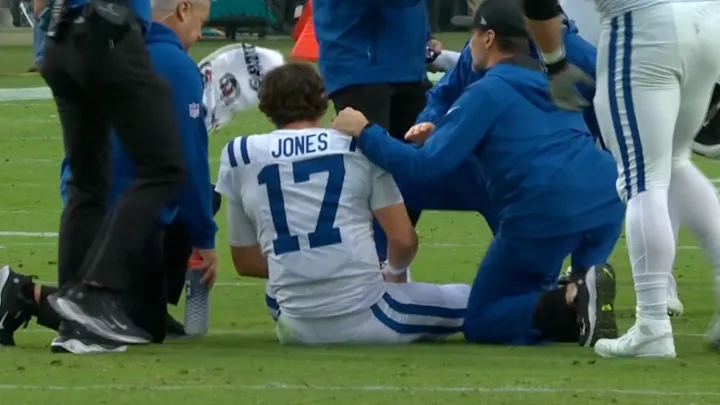
The silence inside the stadium said everything. One moment, hope still lingered. The next, it vanished as Daniel Jones stayed down, clutching at a future suddenly uncertain. For New York Giants fans, this wasn’t just another injury scare. It felt heavier. Personal. Potentially season-defining. As replays looped and social feeds exploded, one question dominated conversations nationwide: what does the Daniel Jones injury mean now?
In a league where timing is everything, this moment arrived at the worst possible time. With playoff dreams fragile and pressure mounting, the Giants are once again staring at a crossroads shaped by health, resilience, and unanswered questions.
What We Know So Far About the Daniel Jones Injury
Early reports confirm that the Daniel Jones injury occurred during live action, not a freak off-play incident. That detail matters. It speaks to the physical toll Jones has absorbed behind a struggling offensive line, a storyline Giants fans know all too well. Medical staff evaluated him immediately, signaling concern rather than caution.
While the team has avoided rushing out definitive timelines, insiders describe the injury as serious enough to require further imaging and specialist review. In today’s NFL, where transparency battles strategy, the lack of specifics only fuels speculation. The Daniel Jones injury instantly became one of the most searched sports topics in the United States within hours.
How the Injury Happened and Why It Looked Alarming
The play itself wasn’t flashy. No highlight hit. No dramatic collision. That’s what made it unsettling. Jones went down under pressure, twisting awkwardly as defenders closed in. He didn’t bounce up. He didn’t jog to the sideline. He stayed still.
For analysts, that reaction raised red flags. Non-contact or low-impact injuries often signal deeper issues, especially for quarterbacks who rely on mobility. The Daniel Jones injury immediately shifted commentary from game analysis to long-term consequences, with former players noting how deceptively damaging such moments can be.
Giants’ Season Plans Suddenly in Question
The timing of the Daniel Jones injury could not be worse for New York. The Giants entered this stretch of the season needing consistency and leadership under center. Jones, despite criticism, remained the stabilizing force in the locker room.
Without him, the offensive identity changes overnight. Play-calling tightens. Risk tolerance shrinks. Defensive pressure intensifies. In a division as unforgiving as the NFC East, even a short absence can derail momentum. The Daniel Jones injury doesn’t just impact one position — it reverberates across the entire roster.
Statistical Impact Jones Has on the Giants
Numbers tell a revealing story. When Daniel Jones starts and finishes games, the Giants average significantly more offensive yards per drive. His rushing ability alone forces defenses to hesitate, opening lanes that backups rarely replicate.
Red-zone efficiency also dips without him. Over recent seasons, New York’s touchdown conversion rate drops noticeably in games Jones misses or leaves early. That context explains why the Daniel Jones injury has analysts revisiting playoff probability models and adjusting win projections almost immediately.
Injury History Raises Long-Term Concerns
This isn’t the first time durability has followed Jones into headlines. Previous neck and lower-body injuries already placed him under scrutiny. The Daniel Jones injury adds another chapter to that narrative, fairly or not.
In the NFL, perception matters nearly as much as performance. Front offices weigh availability heavily when planning futures. Even if Jones recovers fully, repeated injuries can influence contract discussions and draft strategies. The Daniel Jones injury therefore carries implications beyond this season alone.
Locker Room Reaction Tells a Bigger Story
Inside the Giants’ locker room, reactions were telling. Teammates spoke carefully but emotionally, emphasizing Jones’ toughness and leadership. Several veterans described him as the emotional anchor of the offense.
That response highlights what doesn’t show up in box scores. The Daniel Jones injury affects morale. Preparation changes. Younger players feel the weight of stepping into larger roles. In close-knit locker rooms, losing a leader — even temporarily — creates a psychological gap that’s hard to quantify but impossible to ignore.
Who Steps In If Jones Misses Time
Backup quarterback discussions have quickly moved from theoretical to urgent. Coaches now face difficult choices: simplify the playbook or trust depth pieces in high-pressure situations. Neither option is ideal.
History suggests teams rarely replicate success immediately after losing a starting quarterback. The Daniel Jones injury forces the Giants to balance caution with competitiveness, knowing that one rushed decision could compound damage already done.
Fan Reaction Reflects Growing Frustration
Across social media and sports radio, reactions to the Daniel Jones injury range from concern to exhaustion. Many fans express sympathy for Jones while simultaneously questioning roster construction and protection schemes.
Attendance, ratings, and merchandise sales often fluctuate when star players go down. The Giants’ brand, deeply tied to quarterback stability, feels the ripple effects quickly. The Daniel Jones injury has reignited debates that never fully disappeared — about rebuilding timelines, coaching accountability, and organizational direction.
What Medical Timelines Usually Look Like in Similar Cases
While every injury is unique, league data offers some clues. Quarterbacks with similar lower-body or neck-related concerns often miss multiple weeks, sometimes longer depending on severity. Recovery is rarely linear.
Rushing back increases re-injury risk, something teams have grown more cautious about in recent years. The Daniel Jones injury will likely be handled conservatively, even if that means sacrificing short-term wins for long-term health.
How This Could Shape the Giants’ Future Decisions
Beyond this season, the Daniel Jones injury could quietly influence front-office planning. Draft boards shift. Trade deadline strategies adjust. Contingency plans become priorities rather than backups.
NFL history is filled with moments where one injury accelerated organizational change. Whether that happens here remains to be seen, but the Daniel Jones injury undeniably adds pressure to decisions already under scrutiny.
Why This Moment Feels Pivotal for New York
For a franchise searching for stability, this injury feels symbolic. Progress interrupted. Questions resurfacing. Momentum stalled. Yet adversity also reveals direction.
How the Giants respond to the Daniel Jones injury — medically, strategically, emotionally — may define their next chapter more than any single win or loss. It’s not just about recovery. It’s about response.
Stay connected for verified updates, expert analysis, and what comes next as this developing story unfolds. Follow closely, share your thoughts, and don’t miss the latest on how the Daniel Jones injury could reshape the Giants’ season and beyond.