



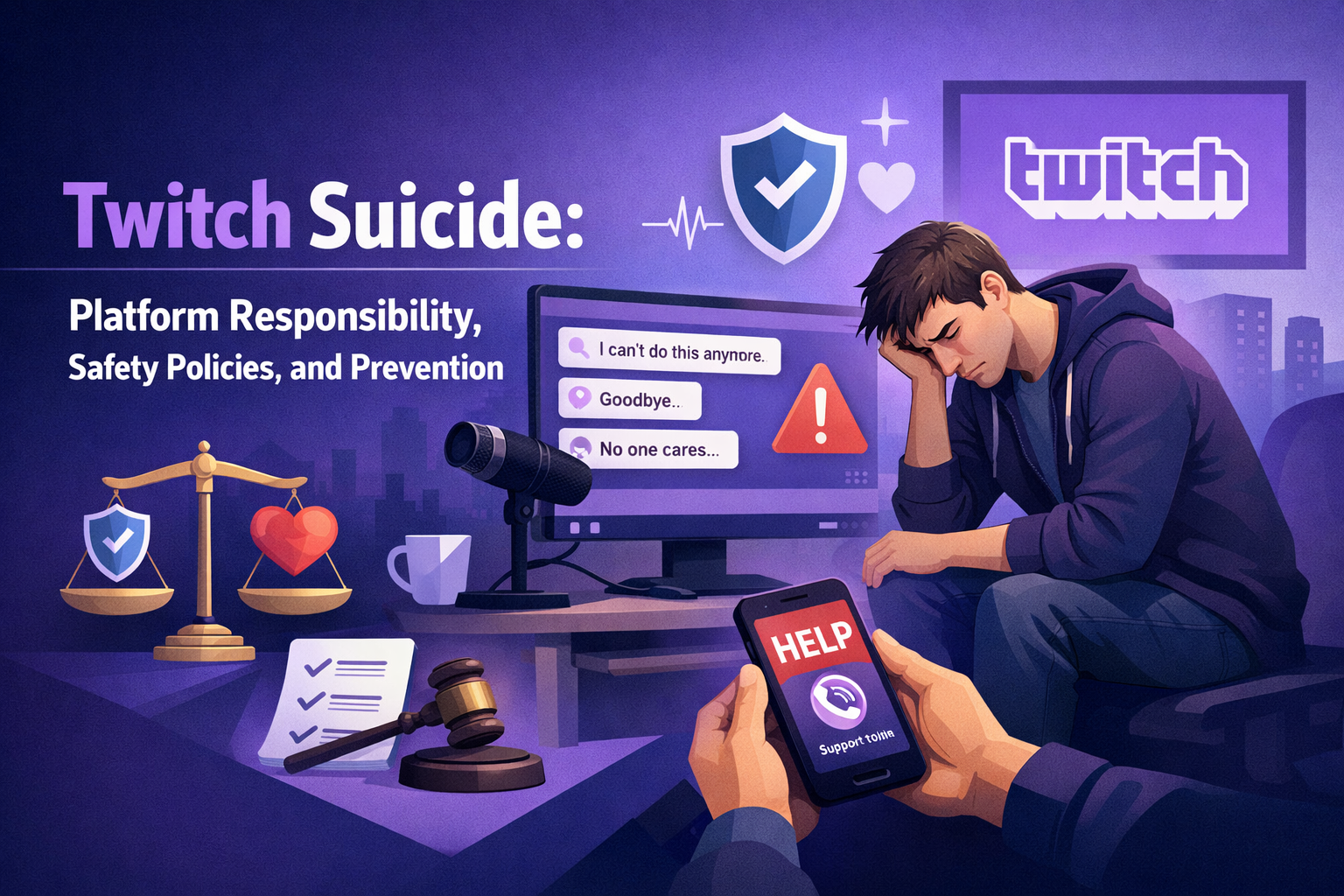
Twitch Suicide: Platform Responsibility, Safety Policies, and Prevention
SEO Title (70 characters)
Twitch Suicide: Platform Responsibility, Safety Policies, and Prevention
Meta Description (under 160 characters)
An in-depth analysis of twitch suicide discussions, platform policies, streamer responsibility, community safety, and prevention strategies.
Twitch Suicide: Understanding Platform Responsibility, Community Impact, and Prevention
Live streaming has transformed how people connect, create, and communicate in real time. Twitch sits at the center of that transformation, hosting millions of creators and viewers who gather around gaming, music, art, and conversation. With that scale comes responsibility, especially when serious mental health topics surface in public, highly visible ways.
The phrase twitch suicide often appears in search results not because Twitch promotes harm, but because people are seeking clarity about how the platform handles crisis situations, disturbing content, and mental health emergencies. This guide addresses that concern directly, offering a clear, responsible, and prevention-focused analysis of how Twitch, streamers, viewers, and platforms intersect around this sensitive issue.
What the Term Represents in Online Search Behavior
The keyword twitch suicide reflects a broader pattern in digital search behavior where users seek explanations after encountering alarming headlines, rumors, or platform-related incidents. In most cases, the intent behind the search is informational rather than exploitative.
Understanding this context is critical for responsible discussion. People searching this term usually want to know how Twitch handles safety, what protections exist, and how communities respond when mental health crises appear in live environments.
Twitch as a Live Platform and Why Risk Is Higher
Live streaming differs from recorded media because events unfold without delay, editorial review, or post-production control. That immediacy increases emotional authenticity but also elevates risk when sensitive situations arise.
Because Twitch content is unscripted and interactive, moderation systems must operate in real time. This reality shapes how the platform approaches discussions related to self-harm, crisis behavior, and viewer safety.
Twitch Policies Related to Self-Harm and Crisis Content
Twitch maintains strict Community Guidelines that prohibit content encouraging self-harm or depicting it in harmful ways. These rules are designed to protect viewers, particularly younger audiences, from exposure to distressing material.
When discussions touch on mental health in an educational or recovery-focused context, they are evaluated differently. The distinction between harmful depiction and supportive conversation is central to how twitch suicide-related content is moderated.
How Moderation Works During Live Incidents
Moderation on Twitch combines automated detection, human review, and community reporting. This layered approach allows faster response when content violates safety standards.
Live incidents are especially challenging, which is why Twitch empowers moderators and creators to intervene immediately. Temporary stream shutdowns, chat restrictions, and rapid review processes exist to minimize harm.
The Role of Streamers in Community Safety
Streamers are not mental health professionals, but they hold influence over large audiences. Twitch encourages creators to set boundaries, redirect conversations, and use available tools when sensitive topics arise.
Responsible streamers understand that discussing heavy subjects requires care. Clear rules, pinned chat messages, and proactive moderation reduce the likelihood that twitch suicide discussions become harmful.
Viewer Responsibility and Community Reporting
Viewers play a critical role in platform safety. Reporting tools allow community members to flag concerning content quickly, triggering review processes.
This shared responsibility model recognizes that no automated system can replace human judgment. When viewers act promptly and responsibly, the platform becomes safer for everyone.
Mental Health Conversations Versus Harmful Content
Not all discussions about mental health are dangerous. Twitch allows educational conversations, awareness campaigns, and recovery-focused storytelling when handled appropriately.
Problems arise when content becomes graphic, sensationalized, or encouraging. The line between awareness and harm defines how twitch suicide topics are evaluated by moderation teams.
The Impact of Viral Clips and Context Loss
Short clips circulating outside Twitch often strip content of context. A moment taken from a longer stream can appear far more alarming than it was in full.
This context loss contributes to panic, misinformation, and misleading narratives around twitch suicide, reinforcing why responsible sharing and accurate reporting matter.
How Algorithms Influence Discovery and Risk
Twitch recommendation systems prioritize engagement, not controversy. However, emotionally charged content can spread quickly once shared externally.
Understanding algorithmic limits helps explain why platforms rely heavily on user reports and human moderation for crisis-related content.
Legal and Ethical Responsibilities of Platforms
From an ethical standpoint, Twitch must balance free expression with harm prevention. Legally, platforms operate under complex regulatory frameworks that differ by region.
The handling of twitch suicide-related incidents reflects this balancing act, combining compliance, ethics, and community standards.
Psychological Effects on Viewers
Exposure to distressing content can affect viewers differently based on age, experience, and emotional state. This is why Twitch emphasizes minimizing exposure and encouraging safer alternatives.
Preventative design choices aim to reduce unintended harm without suppressing legitimate mental health dialogue.
Streamer Burnout and Mental Health Pressure
Creators face unique stressors including performance pressure, income instability, and constant public scrutiny. These factors contribute to burnout and emotional strain.
Addressing twitch suicide responsibly includes acknowledging creator well-being and promoting healthier streaming cultures.
Platform Tools Designed for Safety
Twitch provides tools such as chat moderation, keyword filtering, timeouts, and stream controls. These features help creators manage sensitive situations proactively.
While no system is perfect, these tools form a foundation for reducing harm and responding quickly to emerging risks.
Industry Comparison: How Platforms Handle Crisis Content
| Platform | Live Moderation Speed | Community Reporting | Policy Transparency | Crisis Response Tools |
| Twitch | High | Strong | Public guidelines | Stream shutdowns |
| YouTube Live | Medium | Strong | Public guidelines | Stream restrictions |
| TikTok Live | High | Medium | Partial transparency | Live interruption |
| Facebook Live | Medium | Strong | Public guidelines | Reporting escalation |
This comparison highlights that Twitch operates within industry norms while facing uniquely intense real-time challenges.
Media Coverage and Public Misconceptions
Headlines often oversimplify complex incidents. Sensational reporting can unintentionally amplify harm and misunderstanding.
Clarifying misconceptions around twitch suicide requires careful language, accurate context, and avoidance of speculation.
Educational Initiatives and Awareness Streams
Many creators host charity streams, awareness events, and educational discussions focused on mental health. These initiatives demonstrate how Twitch can be used constructively.
When done responsibly, such content counters stigma rather than contributing to harm.
A Quote on Platform Responsibility
“Digital platforms must be designed not only for expression, but for care—especially when vulnerable moments unfold in public spaces.”
This perspective reflects the growing consensus around ethical platform design and mental health safety.
Prevention Through Design and Culture
Prevention is not a single policy but an ecosystem of design choices, community norms, and education. Twitch continues refining this approach.
Cultural expectations around empathy, reporting, and moderation shape how twitch suicide concerns are addressed long-term.
What Users Can Do When Concerned
Users should avoid sharing alarming clips, report concerning behavior through official channels, and encourage supportive, non-harmful responses.
These actions protect individuals while maintaining platform integrity.
The Future of Safety on Live Platforms
As live content grows, platforms will increasingly integrate AI-assisted moderation with human oversight. Transparency and accountability will remain central.
The evolution of twitch suicide-related policies reflects broader industry learning about real-time digital care.
Conclusion: Responsibility Without Sensationalism
Discussions around twitch suicide demand precision, empathy, and restraint. Twitch is not defined by isolated incidents, but by how it responds, learns, and improves.
By focusing on prevention, community responsibility, and ethical design, the platform—and its users—can address sensitive topics without causing harm.
Frequently Asked Questions
What does the term twitch suicide usually refer to?
The term twitch suicide is typically used by searchers seeking information about how Twitch handles crisis-related incidents and safety concerns.
Does Twitch allow discussions about mental health?
Yes, Twitch allows responsible mental health discussions, provided they do not encourage harm or include graphic content related to twitch suicide.
How does Twitch respond to dangerous live situations?
Twitch uses rapid moderation, stream shutdowns, and review processes to minimize harm when twitch suicide-related concerns arise.
Are streamers responsible for viewer safety?
Streamers share responsibility by moderating chats and redirecting sensitive discussions away from harmful interpretations of twitch suicide.
Why do clips cause misunderstandings?
Clips often remove context, making twitch suicide-related moments appear more extreme than they were in full streams.